
AUTHOR
Dr K.A. Martin Xavier
Senior Scientist at Central Institute of Fisheries Technology, Kochi

Introduction
Global plastic production had risen dramatically since the 1950s, increasing from approximately 2 million metric tons to an estimated 450 million metric tons by 2025. This extraordinary growth had resulted in widespread environmental contamination, particularly through the generation of microplastics (MPs) and nano plastics (NPs), which had become one of the most urgent environmental challenges of the twenty-first century. These particles had been detected across virtually every environmental compartment, including oceans, rivers, lakes, sediments, polar icecaps, marine organisms, and food products consumed by humans on a daily basis.
Classification and sources of Microplastics
Microplastics are defined as plastic particles ranging from 1 μm to 5000 μm in size, originating from both primary and secondary sources. Primary microplastics are those intentionally manufactured at microscopic sizes, such as microbeads found in cosmetics and industrial pellets. Secondary microplastics, by contrast, are those produced through the physical, chemical, and biological fragmentation of larger plastic items over time. The Food and Agriculture Organization (FAO) had identified microplastics as one of the most significant emerging threats to aquatic ecosystems, ranking them second only to climate change in terms of environmental impact.
A classification framework based on the international standard ISO 24187:2023 categorized plastic particles by size into macro plastics, small microplastics, large microplastics, microplastics, and nano plastics, with nano plastics defined as particles smaller than 1 μm. This standardized classification had been established to support consistency in environmental monitoring and risk assessment studies conducted globally.
Hazardous chemical additives in plastics
Considerable attention was drawn to the hazardous chemical additives present within plastic materials. Modern plastics contained numerous additives designed to improve performance, including plasticizers, flame retardants, stabilizers, colorants, and coupling agents. Plasticizers such as benzyl butyl phthalate (BBP), dibutyl phthalate (DBP), and bis(2-ethylhexyl) phthalate (DEHP) were highlighted as particularly concerning, given that they could constitute up to 80% of a plastic’s composition and were associated with endocrine-disrupting activity. Stabilizers including bisphenol A (BPA) and nonylphenol compounds were also flagged as substances of concern, as were colorants containing heavy metals such as cadmium, chromium, cobalt, and lead, all of which were recognized as persistent and highly toxic to biological organisms.
Plastic waste pathways
Riverine transport from urban and industrial areas are identified as a major route, alongside wastewater effluent discharge, degradation of fishing gear, atmospheric deposition of airborne fibres, and coastal runoff. Once in aquatic environments, microplastics get colonized by microorganisms and integrated into marine food webs. Zooplankton ingested these particles, which are then consumed by fish and shellfish, allowing microplastics to transfer through successive trophic levels and ultimately reach human consumers. Studies on the capacity of microplastic surfaces to adsorb persistent organic pollutants such as polycyclic aromatic hydrocarbons (PAHs), polychlorinated biphenyls (PCBs), organochlorine pesticides, and heavy metals showed that desorption of these chemicals occurred far more rapidly in digestive environments than in seawater, thereby increasing their bioavailability upon ingestion.
Human exposure to microplastics
Human exposure to microplastics occurs through three primary routes: ingestion, inhalation, and dermal contact. Ingestion is the most significant pathway, taking place through consumption of contaminated seafood, drinking water, and dietary salt. Both bottled and tap water had been found to contain microplastics worldwide, with bottled water in some studies showing higher concentrations than tap water. Sea salt was identified as a particularly contaminated dietary source due to its direct production from seawater, with polyethylene, polypropylene, polyamide, polyvinyl chloride, and polyethylene terephthalate identified as the most commonly detected polymers. As a result of these findings, the European Union had included microplastics on its Drinking Water Directive watch-list of emerging contaminants.
Health implications of microplastic exposure
The health implications of microplastic exposure are extensive and affect multiple organ systems. The digestive system is found to be particularly vulnerable, with ingested microplastics causing intestinal barrier dysfunction, mucosal injury, inflammation, gallbladder cholestasis, and liver dysfunction. Inhalation of microplastics is associated with pulmonary inflammation, accumulation of particles in lung cells, and nasal dysbiosis. Neurological effects included neuronal damage and reduction in neurotransmitter levels, while cardiac effects encompassed heart fibrosis and myocardial cell apoptosis. The reproductive system also is implicated, as microplastics have been detected in semen, the endometrium, and breastmilk. Testicular exposure is found to impair sperm quality, ovarian exposure leads to cell death, and descendants of exposed individuals are reported to show impaired growth rates. The bloodstream serves as the central vehicle through which microplastics are distributed to all major organs and tissues, underscoring the systemic and far-reaching nature of their biological impact.
Contamination risks in fish curing
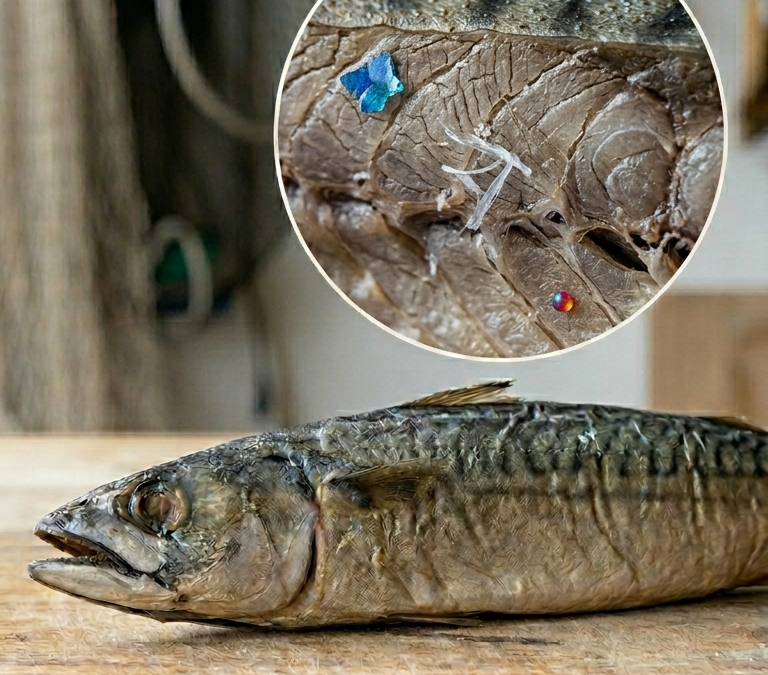
The fish curing industry, which processed approximately 15 to 20 percent of India’s annual fish catch using traditional methods including sun-drying, salting, smoking, pit curing, and fermentation, was found to be particularly susceptible to microplastic contamination through multiple pathways. These include the marine environment itself, solar salt used during processing, atmospheric deposition during open-air drying, handling equipment, and packaging materials. Studies had demonstrated that higher salt-to-fish ratios significantly increased microplastic abundance in finished products, and that salt penetration into muscle tissue facilitated the retention of plastic particles. Open-air drying exposed products to airborne synthetic fibres and fragmented plastics transported by coastal winds, with poor hygienic conditions further compounding contamination risks at each stage of the processing chain.
Conclusion
Microplastic pollution is ultimately recognized as a complex and interconnected food safety challenge, as these particles act not only as contaminants in their own right but also as vectors for chemical pollutants and microorganisms. The generation of baseline contamination data, implementation of standardized monitoring methodologies, and adoption of improved processing practices such as enclosed drying systems are identified as essential steps toward reducing contamination levels. Addressing microplastic pollution is further aligned with global sustainable development goals, with the principles of reducing, reusing, recycling, and responsible plastic disposal underscored as fundamental strategies for protecting both environmental integrity and public health.
For More>>