
AUTHOR
Ms. Chithra M.B
Quality Control and Operations Manager at Gulf Seafood LLC, Dubai

Introduction
Food safety is one of the most critical responsibilities of every food processing establishment. In today’s highly regulated food industry, organizations are expected not only to comply with legal and customer requirements but also to demonstrate a strong commitment toward producing safe and wholesome food products.
One of the most effective ways to achieve this objective is through a well-structured self-inspection audit program. Self-inspection audits provide organizations with an opportunity to critically evaluate their facilities, operational practices, sanitation systems, maintenance conditions, and employee practices on a regular basis.
Unlike external audits, self-inspection audits are proactive internal evaluations conducted to identify potential food safety risks before they develop into serious non-conformities, customer complaints, or product recalls. Effective self-inspections help organizations maintain compliance, improve operational efficiency, strengthen food safety culture, and promote continuous improvement.
What is Self-inspection?
Self-inspection is a systematic and thorough physical review of food processing facilities and operations carried out by trained internal personnel. The purpose of the inspection is to assess actual conditions at a particular point in time and identify both positive practices and areas requiring improvement.
The inspection process helps organizations evaluate whether food safety systems are functioning effectively and whether operational practices comply with Good Manufacturing Practices (GMP), sanitation requirements, HACCP principles, and regulatory expectations. A successful self-inspection audit focuses not only on identifying problems but also on preventing food safety incidents through early detection and timely corrective actions.
Benefits of Self-inspection audits
Regular self-inspection audits provide several important benefits to food processing facilities. They help identify food safety hazards at an early stage, reduce the risk of contamination, improve compliance with regulatory requirements, and strengthen internal operational controls.
Self-inspections also improve employee awareness regarding hygiene and food safety responsibilities. They encourage accountability across departments and help management better understand actual working conditions within the facility. In addition, self-inspection audits support continuous improvement initiatives; reduction of waste and inefficiencies; improved sanitation and maintenance standards; better preparation for customer and regulatory audits; and stronger food safety culture across the organization.
Self-inspection team
An effective self-inspection audit requires the involvement of personnel from multiple departments. Cross-functional participation ensures that all operational areas are properly evaluated. The inspection team may include representatives from top management, production, quality assurance, purchase, warehousing, technical and engineering departments, research and development, finance, hygiene supervision, and maintenance. Team members involved in inspections should be technically competent and possess a strong understanding of food safety principles and operational requirements.
Knowledge requirements for inspection teams
Personnel conducting self-inspection audits should have a thorough understanding of food safety hazards and food safety management systems. Proper technical knowledge enables inspectors to identify potential hazards accurately and evaluate the effectiveness of control measures. The team should be familiar with Good Manufacturing Practices (GMP); Standard Sanitation Operating Procedures (SSOP); Pre-Requisite Programs (PRP); Operational Pre-Requisite Programs (OPRP); Critical Control Points (CCP); HACCP principles; Internal quality procedures; and Local food safety regulations.
Scheduling the inspection
Self-inspection audits should be conducted regularly and according to a planned schedule. Many food processing facilities conduct inspections monthly, although the frequency may vary depending on the type of operation and associated risks. Inspections may be organized area-wise or functionality-wise. Area-wise inspections may cover processing areas, pre-processing sections, warehouses, utility areas, and outside grounds. Functionality-wise inspections may focus on specific operations such as cooking lines, breading systems, freezing sections, or packaging operations. Proper scheduling ensures consistency and helps organizations maintain continuous food safety compliance.
Inspection aids and checklist
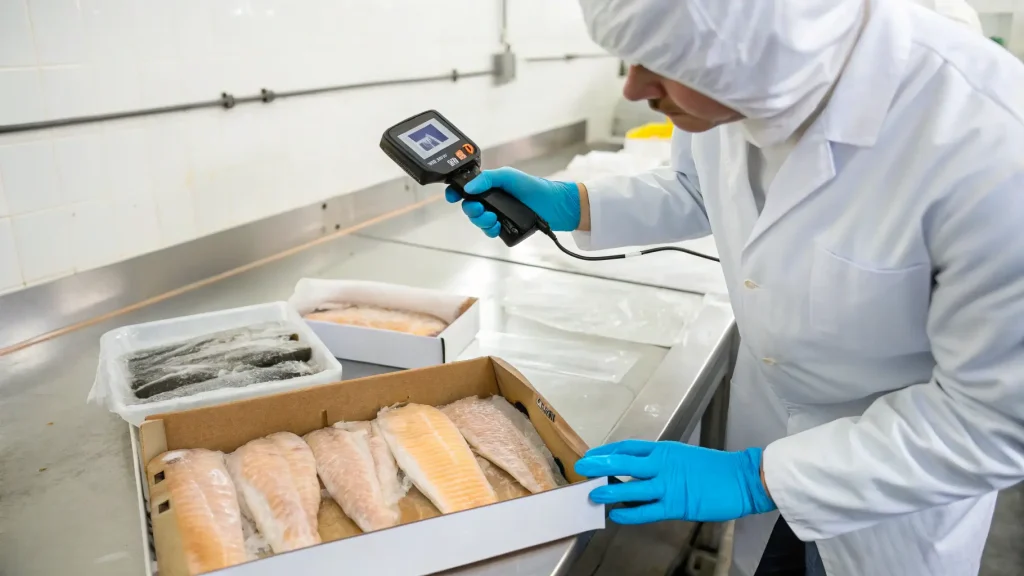
Effective inspections require proper tools and structured inspection methods. Common inspection aids include flashlights, thermometers, chlorine and pH test strips, ladders, and calibration devices. A well-designed inspection checklist helps inspectors systematically review all critical areas of the facility. Typical checklist areas include personnel practices; premises and equipment; maintenance conditions; storage practices; calibration systems; cleaning and sanitation; pest management; employee safety; food defense; and previous inspection findings. The use of structured checklists improves consistency and enhances documentation accuracy.
Operational methods and personnel practices
Operational methods and personnel practices play a critical role in preventing contamination during food production. Self-inspection audits should evaluate employee hygiene practices, uniform compliance, jewelry control, handwashing procedures, waste handling practices, and cross-contamination prevention measures. Locker rooms should be checked for prohibited items such as food, beverages, or personal belongings that may compromise hygiene standards. Inspections should also verify whether loose objects such as pens, thermometers, or tools are properly controlled in production areas. Proper operational control is essential for maintaining product safety and process integrity. Additional operational checks may include receiving temperatures of raw materials; packaging integrity; vehicle hygiene; metal detector verification; strainer and sieve condition; X-ray machine performance; magnet checks; product temperature monitoring; and cooking and chilling temperatures.
For More>>